“Make it look less like an ad” has become one of paid social’s favorite creative rules.
That thinking pushed brands toward iPhone footage that feels native to the feed.
In fact, 86% of brands and retailers believe authentic UGC can improve ad and content performance.
Yet UGC’s real advantage gets more complicated once performance enters the picture.
A winning format has to earn attention, convert it efficiently, survive creative fatigue, and support the brand behind the click.
So, where does UGC actually beat traditional creative across CTR, CPA, and long-term brand value?
Let’s look at the evidence.
P.S. Need a team to produce UGC ads for your next campaign? Browse our Top UGC Agencies to find specialists in creator-led content.
“UGC vs. Polished” Is a Messier Comparison Than It Sounds
Before we compare performance numbers, the labels need some cleanup.
True UGC is content customers create organically about a product or brand.
GoPro offers a classic example: customers film adventures with their cameras, share the footage, and GoPro regularly features those clips across its channels.
But paid social teams use “UGC” more broadly. The term often describes an aesthetic:
- Vertical smartphone footage
- Direct-to-camera testimonials
- Casual product demos
- Creator voiceovers
- Native-looking edits
A brand may brief and pay a creator to produce every second of it.
In parallel, “Polished creative” covers an equally wide range, from six-figure commercial productions to carefully lit product videos filmed by an in-house team. Production quality, scripting, talent, editing, and budget can vary dramatically within either category.
So, the useful comparison is creator-style, platform-native ads versus brand-produced creative with tighter visual control.
That distinction gives the performance data ahead a much clearer baseline.
The Strongest UGC Advantage Shows Up at the Click
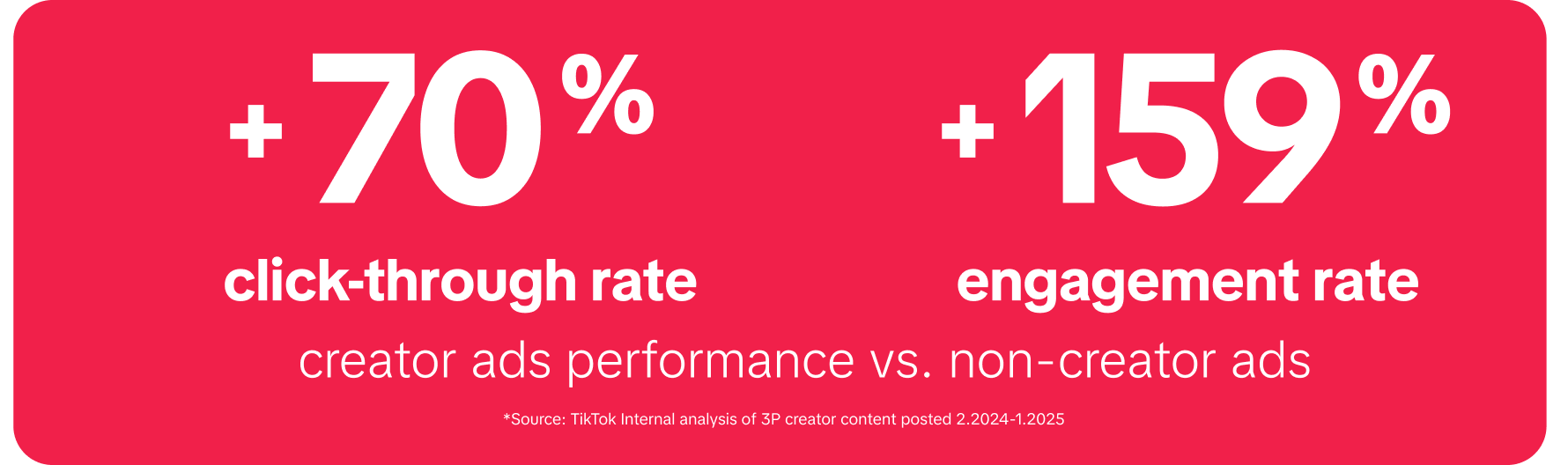
Creator-style ads make their clearest case at the top of the funnel. TikTok’s analysis of creator content found 70% higher CTR and 159% higher engagement than non-creator ads at the same CPM.
That advantage makes sense in a short-form feed.
People make a split-second choice between “I want to watch this” and “this brand wants my attention.” Creator-style ads borrow the framing, pacing, faces, and editing patterns people already associate with the first category.
Google saw a similar pattern across 2,000+ YouTube Shorts ads, recommending Shorts-first creative inspired by native user content.
Still, CTR captures the click rather than its value. A powerful hook can attract curiosity alongside purchase intent.
The next question is whether those extra clicks turn into conversions efficiently.
More Clicks Are Nice. What Happens to Conversions?
Clicks become much more interesting when they turn into customers. TikTok’s Creative Impact research suggests creator-led formats can carry their advantage further down the funnel:
- Spark Ads using creator or user content achieved a 43% higher conversion rate than standard in-feed ads in the cited analysis.
- Creator Marketing Solutions assets delivered 9.7% higher CVR for Spark Ads and 5% higher CVR for non-Spark performance ads versus comparison assets.
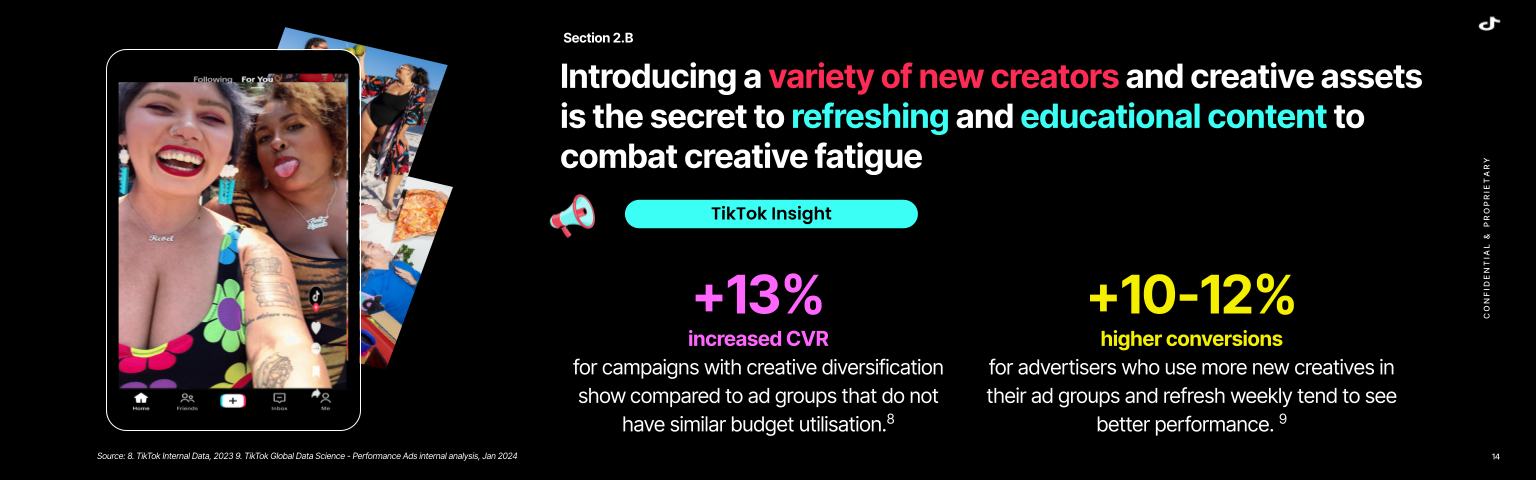
- Campaigns with diversified creative saw 13% higher CVR.
- Advertisers refreshing creative weekly tended to generate 10-12% more conversions.
Here’s where we think the story gets more interesting. Part of UGC’s conversion advantage may come from creative volume.
A studio budget that produces one hero commercial could fund 15 creator variations.
Suddenly, the campaign has more hooks, faces, product angles, objections, demonstrations, and opening frames to test. Platforms get more signals, while marketers learn which combinations actually sell.
Read next: The Ultimate Creative Testing Framework Guide
So when creator-style ads produce a lower CPA, authenticity may explain only part of the result.
More shots on goal can be just as valuable.
Why Creator-Led Ads Often Feel More Trustworthy
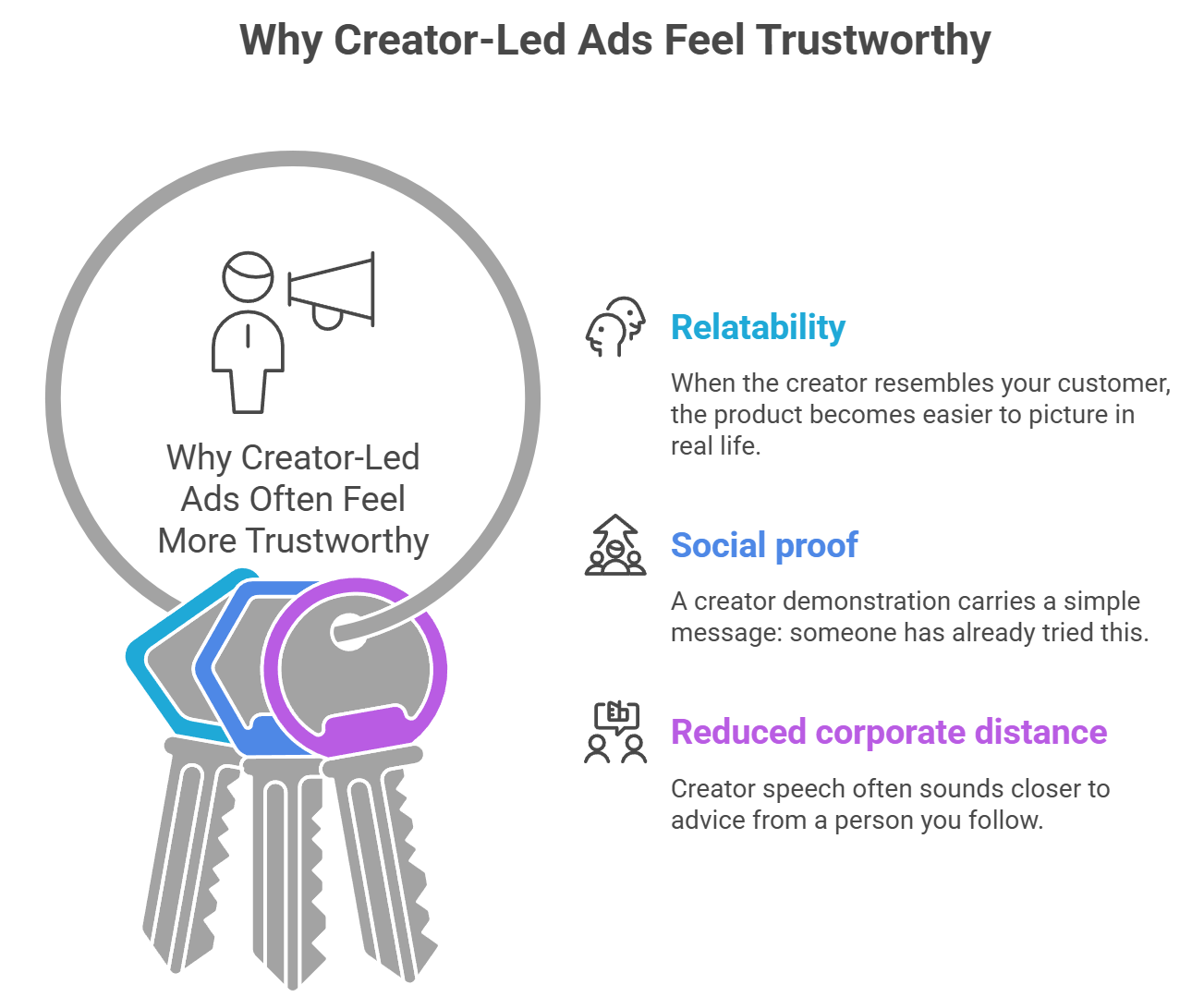
Let’s dig a little deeper into why UGC can work so well. We see three signals doing most of the work.
Relatability
When the creator resembles your customer, the product becomes easier to picture in real life. You see someone with a familiar problem using it, rather than a product sitting inside a carefully controlled campaign.
Social proof
A creator demonstration carries a simple message: someone has already tried this. Nielsen’s Raptive study supports the broader power of creator environments. Among creator fans, purchase intent was 40% higher, recommendation likelihood was 45% higher, and 86%+ trusted creator product recommendations.
Reduced corporate distance
Creator speech often sounds closer to advice from a person you follow. In the same TikTok research we referenced first, ads posted through creator accounts generated 59% higher engagement and 16% higher six-second view-through rates than comparable ads outside that setup.
The takeaway is pretty practical: production roughness alone carries little magic. The person, message, and presentation have to make the recommendation believable.
Creative Fatigue Changes the Economics
A beautiful ad can launch with excellent ROAS and become far less valuable a few weeks later.
Paid social audiences see the same creative repeatedly, and as familiarity rises, thumb-stop rate, CTR, and conversion efficiency can decline.
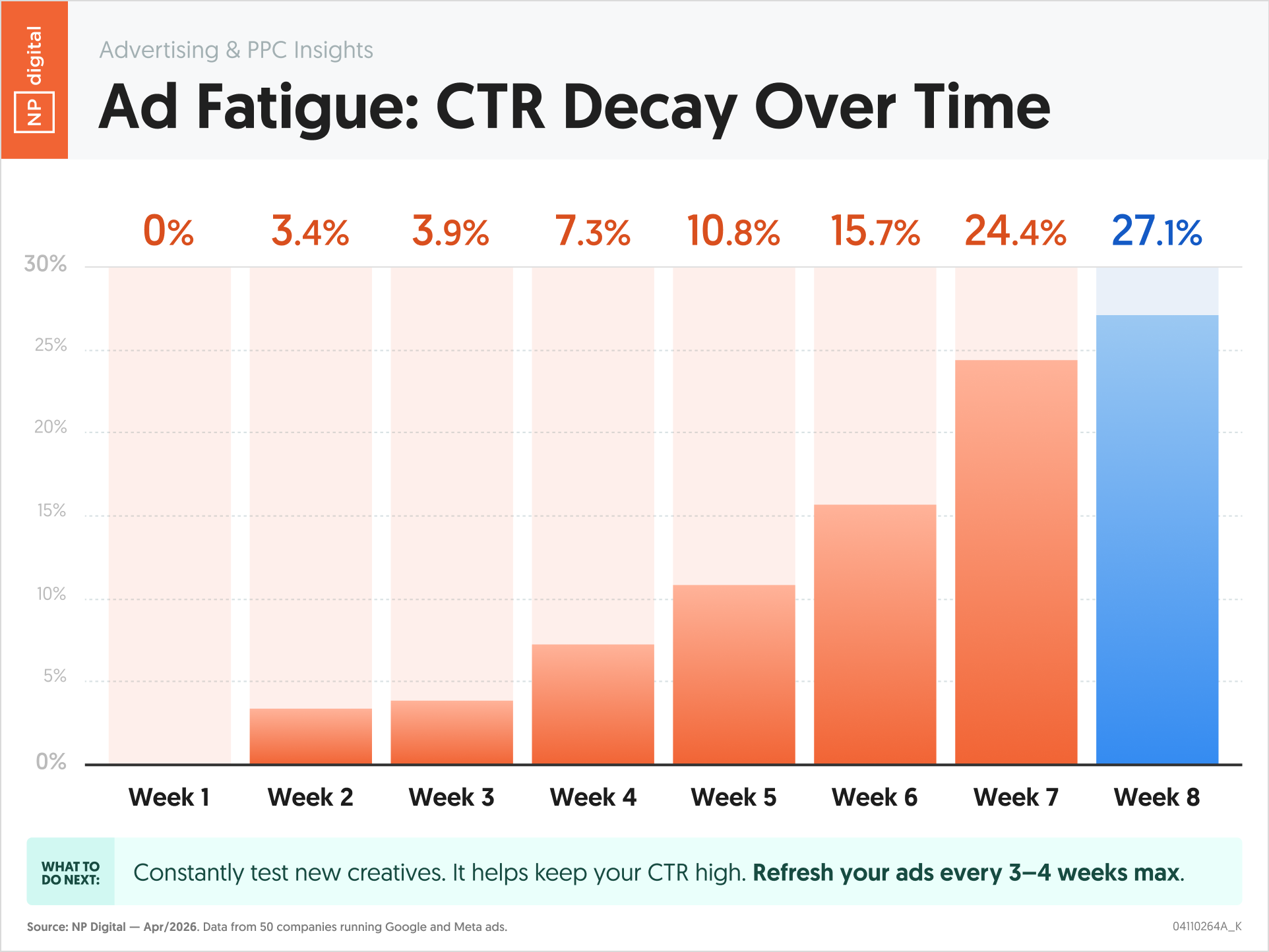
The drop can happen surprisingly fast: NP Digital’s 2026 analysis of campaigns from 50 companies found that ad CTR had declined nearly 25% from its week-one baseline by week seven.
This is where production economics start to matter.
If replacing a polished commercial requires another shoot, crew, location, and editing cycle, each refresh carries a meaningful cost.
Creator-style production gives you more ways to rotate the concept quickly. For example:
- Creator A → Creator B
- Testimonial → Product demo
- Problem hook → Outcome hook
- 30 seconds → 15 seconds
- Voiceover → Talking head
So, when you compare formats, winning-ad ROAS only tells part of the story. A more useful question is how much performance each production dollar generates across the asset’s entire useful life.
This calculation can make a cheaper ad with frequent refreshes economically more effective than an expensive winner that loses efficiency faster than you can replace it.
That said, some campaign goals give polished creative much more room to shine.
Where Polished Ads Still Have the Advantage
The picture changes once the creative has a bigger job than earning an immediate response.
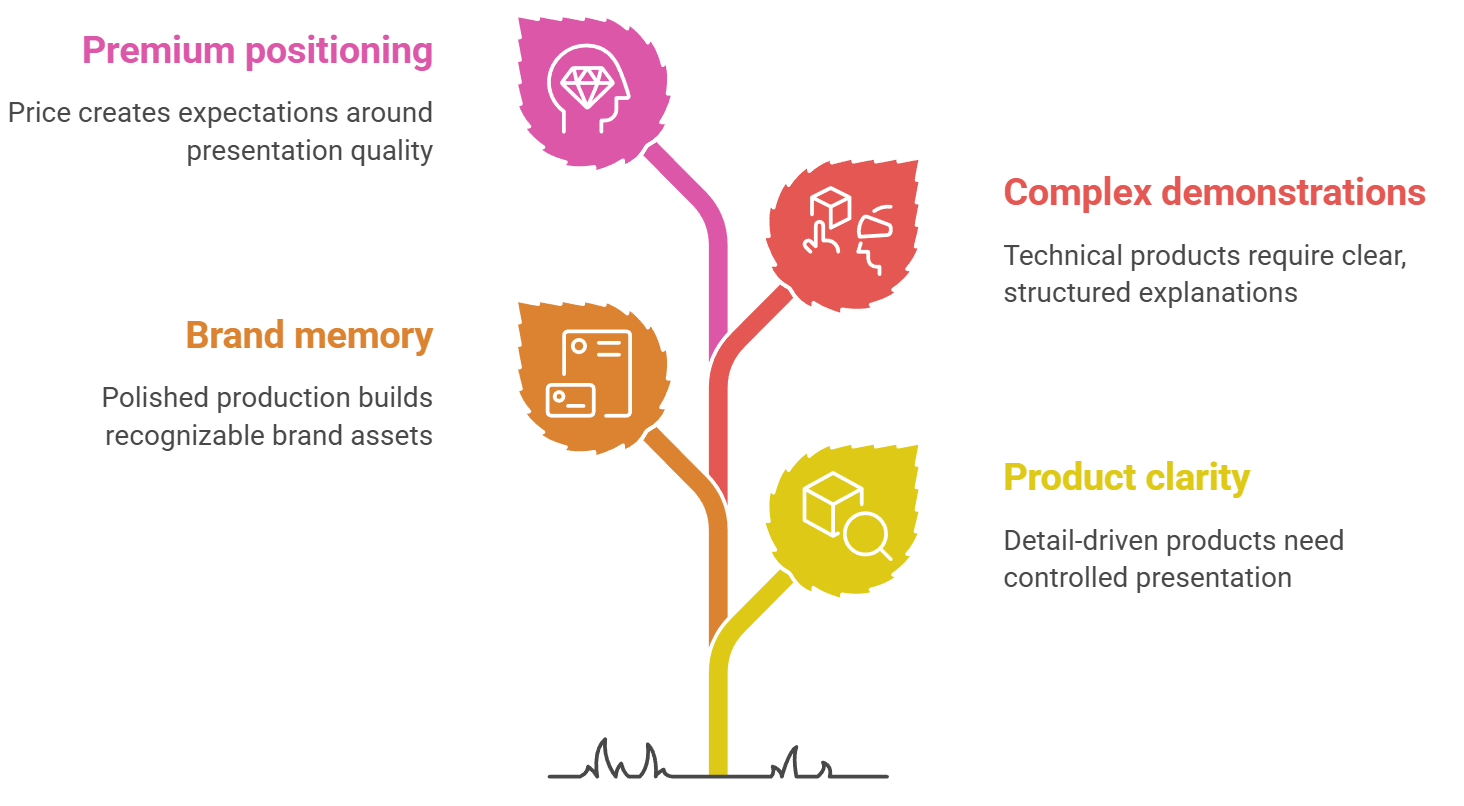
Product clarity
Some products sell through detail. Luxury goods, cars, furniture, food, and design-heavy products benefit from controlled lighting, precise framing, close-ups, and deliberate styling that show exactly what customers are paying for.
Brand memory
Polished production can build recognizable assets across campaigns. Think recurring characters, distinctive packaging, music, typography, cinematography, or a visual system people eventually associate with one brand.
Complex demonstrations
Technical products often require more than a creator holding them up to a phone camera. Animation, diagrams, macro shots, multiple angles, and structured demonstrations can explain features far more clearly.
Premium positioning
Price creates expectations around presentation. A $4,000 product shown exclusively through shaky bedroom footage can send a very different quality signal from carefully art-directed creative.
But creator-led and polished approaches can work together.
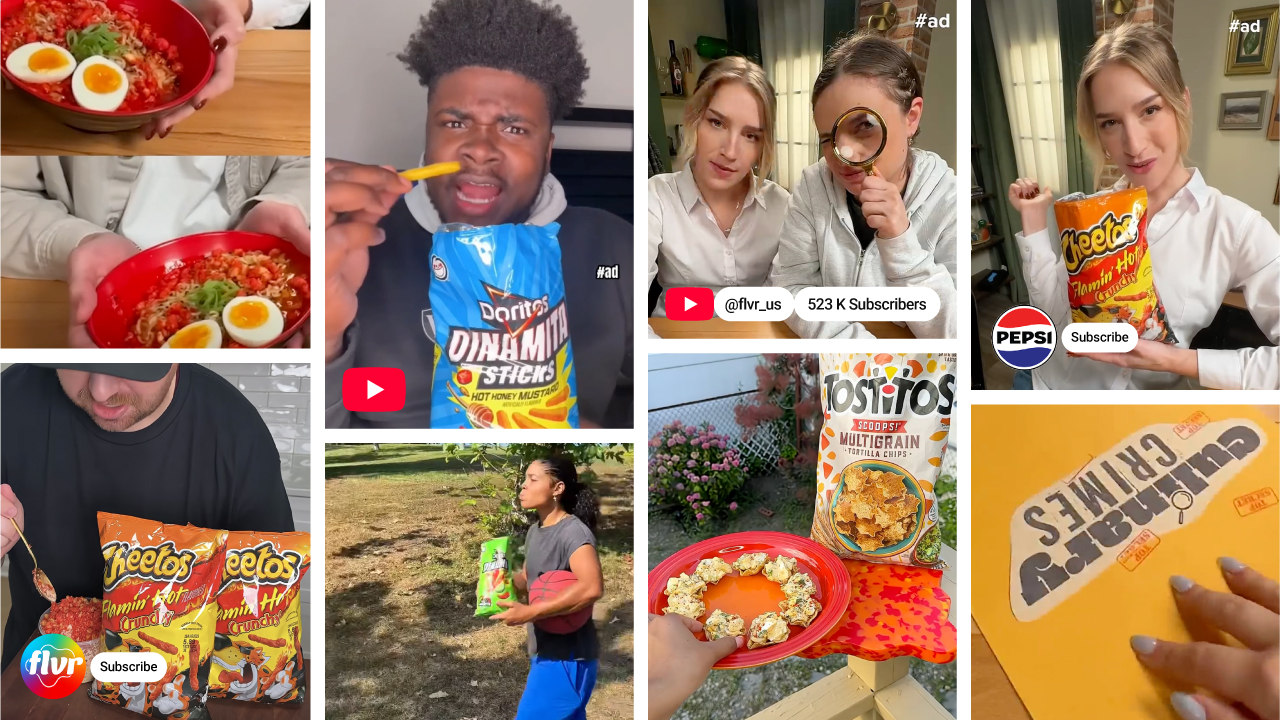
PepsiCo’s FLVR program partnered with 169 creators to produce food-focused content, including 300+ YouTube Shorts, while keeping participating brands integrated into the creative.
FLVR gained 500,000+ subscribers and delivered a 12% lift in ad recall plus a 3% lift in purchase intent.
Why a Hybrid Creative Strategy Often Makes More Sense
At this point, choosing one format as the universal winner feels unnecessarily limiting. A stronger approach is to give each creative style the job that matches its strengths.
In practice, that division of labor can look like this:
There’s also a useful middle ground: polished UGC.
Think creator delivery, natural language, and handheld framing, paired with professional lighting, cleaner audio, tighter pacing, thoughtful scripting, and dedicated product shots.
The content still speaks the visual language of the feed, while every production choice has a purpose.
That balance also gives brands more room to maximize their UGC content without polishing away the creator-led qualities that made it work in the first place.
Read next: Best Content Marketing Agencies
What You Should Actually Test
So, how do you figure out which approach deserves more of your budget?
We’d test the concept before judging the production style.
Take one core message, such as: “This moisturizer fixed the dry patches around my nose.”
Then build three versions:
- Raw creator testimonial
- Creator video with professional editing and product B-roll
- Fully produced brand ad
Keep the audience, offer, landing page, and core claim as consistent as possible.
Then compare 3-second hold rate, CTR, CPC, landing-page conversion rate, CPA, ROAS, creative lifespan, and production cost per winning variation.
Run several creatives within each format, too.
A single creator video against a single studio ad mostly tells you which individual concept won that round.
Pro tip: We want the pattern across multiple tests. That gives you a much stronger answer about which production style earns attention, converts efficiently, lasts longer, and makes the best use of your creative budget.
The Winner Is the Creative That Fits the Job
UGC versus polished creative sounds like a format battle, but the performance data points somewhere more useful.
The better ad is the one built for the job you need it to do.
Sometimes that means somebody holding an iPhone and explaining why the product worked for them. Sometimes it means a $50,000 shoot built around product detail and brand memory.
Increasingly, the strongest creative sits between those extremes, combining creator credibility with deliberate production.
Test the message, measure the full economics, and let performance decide how polished the next ad should be.
FAQs
Is UGC better than polished ads for paid social?
UGC often performs well for attention, CTR, trust, and rapid testing, while polished creative can be better for product clarity, premium positioning, and brand memory.
Why do UGC ads often get higher CTR?
Creator-style ads use familiar feed conventions such as handheld framing, direct-to-camera delivery, and native pacing, which can help them earn attention faster.
Does higher CTR mean better ad performance?
Higher CTR shows stronger click generation, while CPA, conversion rate, ROAS, and creative lifespan reveal whether those clicks create efficient business results.
What is polished UGC?
Polished UGC combines creator-led delivery with stronger scripting, lighting, audio, editing, and product shots while keeping the content visually native to the platform.
What should brands test first?
Start with one core concept, then test it across raw creator content, polished creator content, and fully produced brand creative while keeping the offer, audience, and landing page consistent.